
C1-C2
Germany's Narrow Climate Success Masks a More Serious Strategic Drift
An advanced article about target compliance, sector failures, and a government split over fossil fuels. A proficient-level rewrite of the same report with fuller policy and structural nuance.
Based on source story: Germany's Climate Protection measures are barely on target from DW News
Change level
Open the same story in another CEFR level whenever you want an easier or harder version.
News language
Switch this story between the English lesson and the translation in your selected site language.
Play browser audio
Browser audio
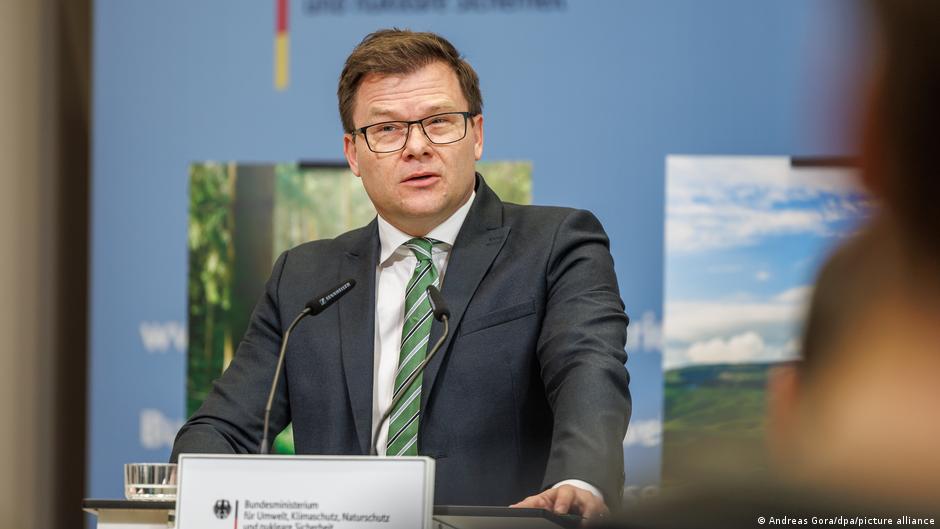
Germany's 2025 climate report confirms that the country remained within its emissions but only narrowly. Greenhouse gas output fell by just 0.1%, leaving total emissions at 648.9 million tons of CO2 equivalents, only 12.8 million tons below the permitted level. Environment Minister Carsten Schneider presented the figures as proof that Germany is still honoring its commitments, yet he also acknowledged that progress has lost momentum and that future targets will be far harder to reach without stronger action.
The main concern is that current policy may be moving in the wrong direction. Chancellor Friedrich Merz's government wants additional gas-fired power plants and has significantly the previous heating law, which had pushed new systems toward renewable energy. Meanwhile, transport remains stubbornly emissions-heavy, as most new cars are still powered by petrol or diesel. Germany is supposed to reach a 65% reduction from 1990 levels by 2030, but it has only achieved 48% so far. That gap explains why the opposition Greens warn that renewed reliance on fossil fuels could erode the country's remaining climate
Germany's latest climate report offers a mixed picture: the country has formally with its 2025 emissions target, yet only by the smallest of margins. Total greenhouse gas emissions fell by just 0.1% to 648.9 million tons of CO2 equivalents, leaving Germany 12.8 million tons below the legal threshold. Carsten Schneider, the environment minister, presented this as evidence that the country remains on course for now, but his own warning was unmistakable: the pace of has slowed, and the current result is too fragile to guarantee future compliance.
What makes the situation especially problematic is the contrast between long-term ambition and short-term policy. Germany is committed to cutting emissions to 65% below 1990 levels by 2030 and 88% by 2040, yet it has only reached 48% so far. At the same time, Friedrich Merz's government is backing new gas-fired power plants and reversing elements of the earlier heating transition by once again allowing more gas and oil systems. Transport remains another weakness, with electric cars still far from dominant. In that context, the report does not simply measure climate performance; it exposes a growing rift inside the government over whether Germany intends to accelerate its energy transition or manage its delay.
Key words from this story
Study card
Useful chunks for daily speech
Save chunk