
C1-C2
At the 2026 Oscars, Entertainment and Political Conscience Were Impossible to Separate
An advanced article about satire, war, censorship, and the political symbolism of the ceremony. A proficient-level rewrite of the same story with fuller cultural and political nuance.
Based on source story: Oscars 2026: All the political moments from DW News
Change level
Open the same story in another CEFR level whenever you want an easier or harder version.
News language
Switch this story between the English lesson and the translation in your selected site language.
Play browser audio
Browser audio
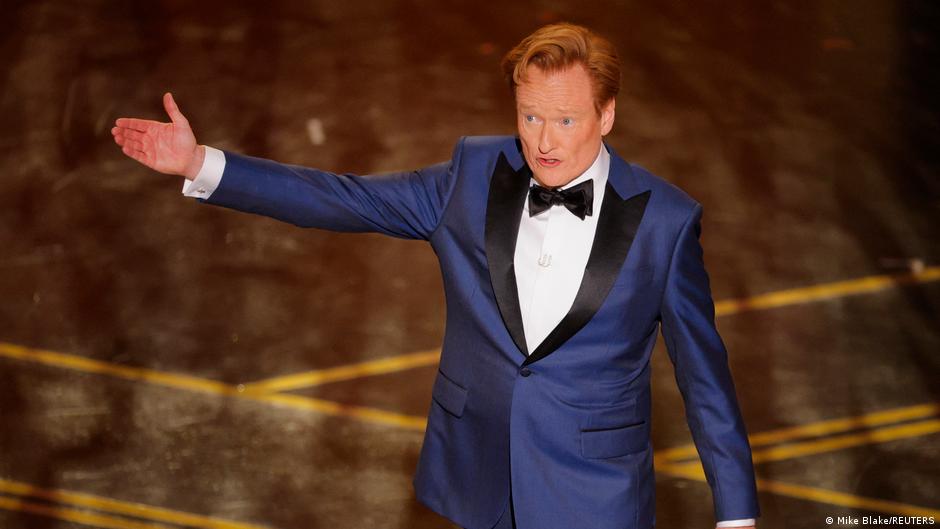
The 2026 Oscars demonstrated how difficult it has become for a major cultural event to remain separate from politics. Conan O'Brien opened the ceremony by joking about Donald Trump, the Kennedy Center, and the Epstein files, before shifting into a more serious reflection on the chaotic and frightening mood of the present moment. The ceremony's dominant films echoed that atmosphere: "One Battle After Another" portrayed resistance against an authoritarian state, while "Sinners" examined racial violence and historical injustice.
The stage then became an for direct political speech. Javier Bardem delivered an anti-war message and called for a free Palestine, while other guests wore symbols linked to anti-deportation protests and ceasefire campaigns. Joachim Trier urged voters not to support politicians who ignore the suffering of children, and later expanded that point by referring to Gaza, Ukraine, and Sudan. Jimmy Kimmel, while introducing the documentary award, condemned attacks on free speech and praised filmmakers who work under pressure. When "Mr Nobody Against Putin" won, its creators argued that countries are not only lost through dramatic events, but through countless small choices to remain silent or
The 2026 Oscars made clear that even Hollywood's most night of self-celebration can no longer pretend to exist outside politics. Conan O'Brien may have suggested beforehand that he wanted humor without anger, but his opening monologue quickly moved from satire into pointed commentary about Donald Trump, the Kennedy Center, the Epstein files, and the broader anxiety of the current moment. That framing was mirrored by the night's major winners: "One Battle After Another" and "Sinners" were not simply successful films, but works whose themes of authoritarianism, racism, and state violence shaped the moral atmosphere of the ceremony itself.
What followed was less a series of isolated remarks than a expression of political conscience. Javier Bardem's anti-war statement, the visible presence of Artists4Ceasefire and "ICE OUT" symbols, Joachim Trier's insistence that all adults bear responsibility for children in conflict zones, and Jimmy Kimmel's defense of free speech all pointed in the same direction. The documentary victory for "Mr Nobody Against Putin" brought that argument to its sharpest form: its filmmakers suggested that democratic collapse is advanced not only by overt repression, but by the of ordinary compromises, silences, and acts of complicity. In that sense, the ceremony was not merely reacting to politics; it was acknowledging that the cultural sphere has become one of the few places where moral resistance is still being publicly staged.
Key words from this story
Study card
Useful chunks for daily speech
Save chunk