
B1-B2
Hollywood's Biggest Night Became a Platform for Protest
A mid-level article about anti-war statements, film themes, and criticism of censorship. An upper-intermediate version that keeps the same speeches, symbols, and political themes.
Based on source story: Oscars 2026: All the political moments from DW News
Change level
Open the same story in another CEFR level whenever you want an easier or harder version.
News language
Switch this story between the English lesson and the translation in your selected site language.
Play browser audio
Browser audio
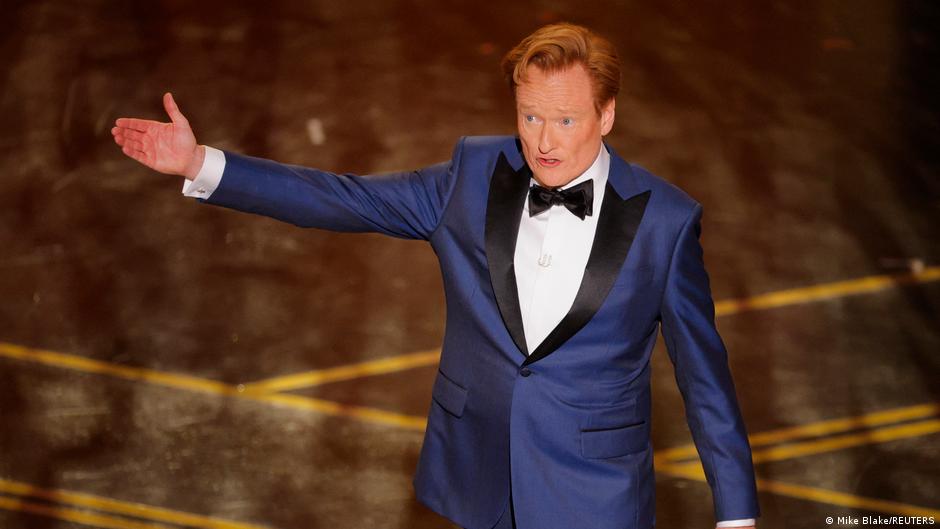
The 2026 Oscars became a strongly political event even though host Conan O'Brien had suggested before the show that he wanted to avoid anger and In his opening monologue, however, he joked about Donald Trump, the Kennedy Center, and the Epstein files, while also telling viewers that the world was going through chaotic and frightening times. The ceremony then continued in the same direction, as the biggest winning films dealt with authoritarian rule, immigration racism, and historical injustice.
Political statements also came directly from the stage. Javier Bardem said "No to war and free Palestine," while several stars wore pins linked to immigration protests or ceasefire campaigns. Norwegian filmmaker Joachim Trier urged audiences not to support politicians who ignore suffering children, later naming Gaza, Ukraine, and Sudan. Jimmy Kimmel used the documentary award to criticize attacks on free speech, and the team behind "Mr Nobody Against Putin" argued that people lose their countries through many small acts of silence and
Although Conan O'Brien initially tried to present the Oscars as a celebration of cinema rather than politics, the 2026 ceremony quickly turned into a for protest and criticism. O'Brien mocked Donald Trump without naming him directly, joked about the renaming of cultural institutions, and pointed to the wider atmosphere of fear and disorder. The political tone was by the evening's major winners, especially "One Battle After Another" and "Sinners," both of which explore state violence, racial injustice, and the abuse of power.
The most direct interventions came from presenters and winners. Javier Bardem used his moment on stage to say "No to war and free Palestine," while guests displayed "ICE OUT" and Artists4Ceasefire pins. Joachim Trier said adults are responsible for all children and later spoke backstage about the suffering of children in Gaza, Ukraine, and Sudan. Jimmy Kimmel, presenting the documentary award, attacked censorship and praised filmmakers who risk their safety to tell the truth. When "Mr Nobody Against Putin" won, its directors warned that grows through many ordinary acts of complicity.
Key words from this story
Study card
Useful chunks for daily speech
Save chunk